Repeatable systems are the fourth move of my method, and this is where they live. Communications gets a company noticed; operations decide whether it can keep its promises. As a fractional COO, I build the machinery underneath: fast, durable, designed to compound. Chess again: the operating spine is how you control the center of the board before anyone else reads the position.
The operating spine
Every company I run gets the same architecture, tuned to its market. It is the machinery that lets founders and principals stay in front of customers while the company underneath them simply works:
- Accounting and finance infrastructure: general ledger, AP/AR, payroll, expense management, financial controls, payment systems, vendor management.
- CRM and pipeline management: deal flow, client and partner tracking, relationship management that turns a network into a system.
- HR and people operations: employee handbook, hiring playbook, onboarding, performance management, benefits, and compensation administration.
- Compliance and governance frameworks: built for firms operating adjacent to government and defense, where trust is the product.
- Security infrastructure: information security policies, endpoint and device security, secure communications, and vendor and physical security appropriate to defense-facing work.
- Operating cadences and reporting: meeting rhythms, decision templates, and KPI dashboards, so the leadership team sees the board in real time.
Washington Office
Washington Office was a government relations firm whose product was, at bottom, the power map itself: knowing where influence sat across Capitol Hill, the agencies, and industry, and how to reach it. As chief of staff I was the sole architect of every operational, financial, and people system the firm ran on, and the firm scaled to 24 clients in year one on that machinery.
The lesson that carries everywhere: principals win clients; systems keep them. Client intake, delivery cadence, billing, and people operations ran without the principals touching them, which is precisely why the principals could stay in the rooms where the clients were won.
Capital Atlas
As COO of Capital Atlas I ran company operations through the full lifecycle: the financial, legal, and administrative infrastructure of the business from standing start to final close. Banking and payments, vendor relationships, legal and financial administration: built, operated, and governed end to end.
That lifecycle included the part most operators never have to do: a clean wind-down. Accounts closed, vendors settled, final distributions executed without loose ends. How a company ends says as much about its operator as how it grows. Endgames are still chess.
STATION DC
The Strategic Communications page shows what STATION DC looks like from the stage. This is what it looks like underneath. I operate the machinery of a 700+ member community: the membership lifecycle (renewal waves of 165 members at a time, retention campaigns for at-risk cohorts, automation replacing hand-tracked reminders) alongside partner-program delivery from contract and invoice through run-of-show, and an event operation that holds a six-events-a-week tempo without dropping a detail. Underneath all of it sit the KPI dashboards and analytics that tell leadership what is actually working, and the long-range strategy those numbers feed.
Same building, two different jobs: upstairs I work the web, putting companies in front of their buyers; downstairs I keep the board itself set: profitable, renewed, and running on time.
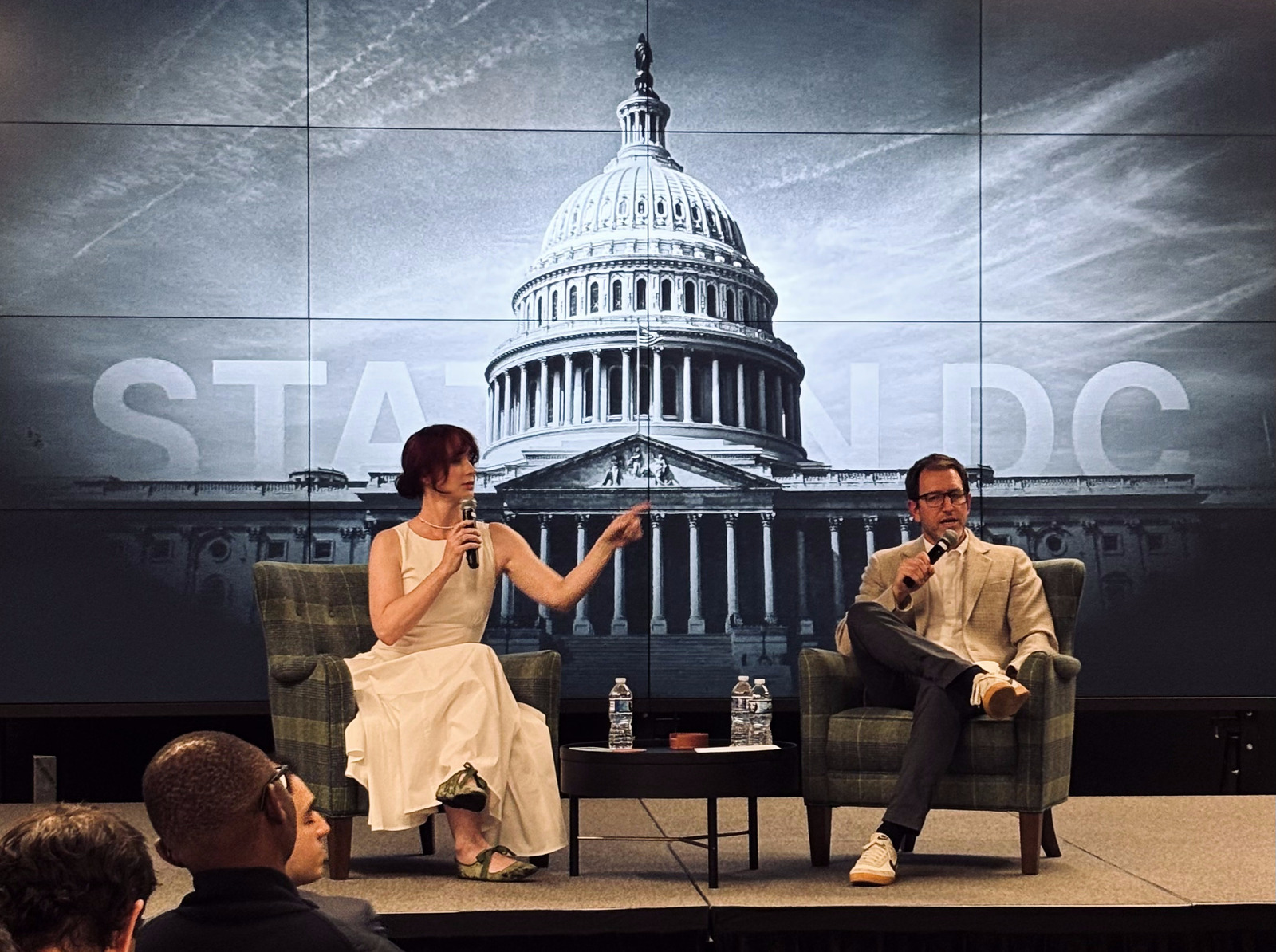
On the STATION DC mainstage: the upstairs job, running on the machinery downstairs.
How I engage
A company past the idea stage, with real momentum and no one dedicated to running the machine underneath it, is the right moment to bring this in. Founders build the product. I build the company around them: the systems, the cadence, and the connections it needs, one move ahead of where the company is, two ahead of where it’s going.
Most of these engagements start fractional, a few hours a week alongside a small number of other companies. Where the company and the mandate are right, I am open to making it full-time.